What a Freelance Software Engineer Does With an AI Workflow
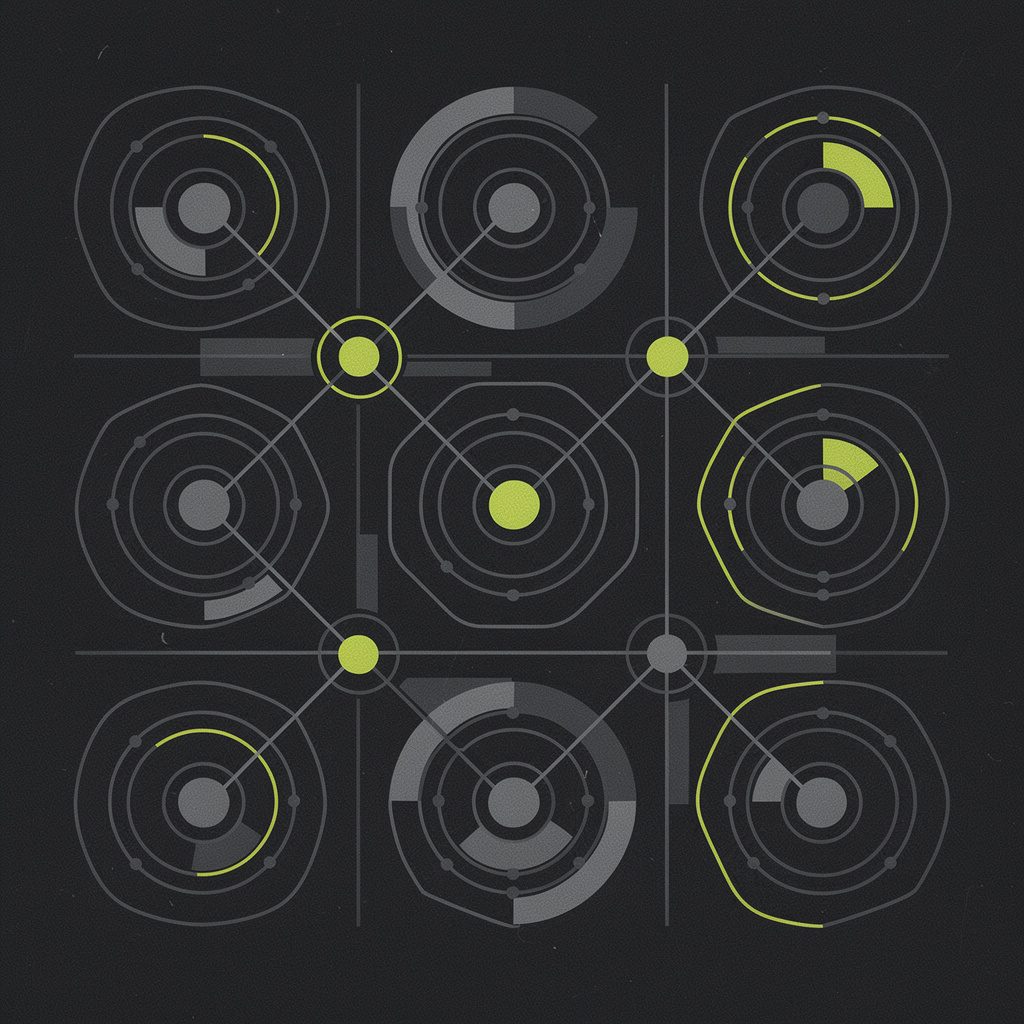
A freelance software engineer working on AI products in 2026 is not primarily writing prompts. The model is one component. The rest of the job is building the workflow that makes the model's output safe to use, verifiable against a source, and gated before anything consequential happens. That distinction matters more than it sounds.
The industry moved fast. Early retrieval-augmented generation setups were straightforward: embed a document, retrieve chunks, stuff them into a prompt, return text. That worked well enough for demos. It broke under production load, under edge cases, and under any requirement that the output be auditable. Agentic architectures, frameworks like LangGraph and CrewAI, and native structured outputs via Pydantic have changed what production AI actually looks like. The shift is not cosmetic. It changes how you design the system from the first day.
The model is not the product
Every AI product I have built treats the model as a component with a contract, not as the thing that ships. The contract is simple: given this input, return a valid, typed structure. Nothing else. OpenAI, Anthropic, and Gemini all enforce JSON schema at the API level now. That eliminates the parsing errors that plagued early pipelines, where you would receive a response that looked like JSON, was not quite JSON, and broke your downstream logic in a way that was hard to reproduce.
Structured outputs mean the model either returns what you asked for or it fails explicitly. Explicit failure is better than silent corruption. You can retry, log, and alert on an explicit failure. Silent corruption reaches the user.
The rest of the product is orchestration, verification, and gates. Orchestration decides which tools the model can call and in what order. Verification checks the output against a source of truth before it moves downstream. Gates decide whether a human needs to approve before the workflow continues.
What verification actually looks like in practice
On Fursa, the AI workflow covers visa route eligibility across more than 170 destination countries. The model reasons over immigration rules. Immigration rules change. A model that was correct last month may be wrong today if a country updated its visa policy.
Verification here is not optional. The output of the model is checked against the source document or the official data feed before it is surfaced to the user. If the model's answer does not match the verified source, the workflow does not proceed. It flags the discrepancy and routes it for human review. The user never sees a confident answer that was produced by stale reasoning.
This is the pattern: model output is a candidate, not a result. The result is what survives verification.
Human gates are not a sign the AI failed
A gate in a workflow is a deliberate pause. The workflow reaches a state, checks whether the output meets a threshold, and either continues automatically or holds for a human. Getting that threshold right is most of the engineering work.
On Job Hunter, the outreach engine crawls more than 185 career pages daily and generates personalised application materials. The model drafts. A human reviews before anything goes out under the user's name. That is not a limitation of the AI. It is the correct design. The cost of a bad outreach email is real. The model is fast and consistent. The human is the check on context the model does not have.
The mistake I see most often is treating gates as temporary scaffolding to remove once the model gets better. Some gates should stay permanently. They exist because the decision has consequences that justify a human in the loop, not because the model is immature.
How agentic architecture changes the build
A single-shot prompt pipeline has one failure mode: the model returns something wrong. An agentic workflow has many failure modes. An agent calls a tool. The tool returns data. The agent reasons over the data and calls another tool. Each step can fail, return unexpected data, or produce a result that is locally correct but globally wrong.
LangGraph handles this with explicit state machines. Each node in the graph is a function. Each edge is a condition. You can inspect the state at any point, replay from any checkpoint, and add a gate at any edge. That observability is not a nice-to-have. It is how you debug a workflow that ran 500 times correctly and then failed on input 501.
On GritGateway, the talent intelligence platform covers more than 25 African countries. The matching workflow runs multiple agents: one to parse the candidate profile, one to score against the role criteria, one to check for regional compliance signals. Each agent has a defined input schema and a defined output schema. If any agent returns outside its schema, the workflow halts. Nothing downstream sees a partial result.
That architecture also means you can swap one agent without touching the others. The contract is the schema. The implementation can change.
What a freelance software engineer actually ships
Shipping an AI product means shipping the workflow, the verification layer, the gates, the observability, and the fallback paths. The model is almost the easy part. OpenAI and Anthropic have made the model reliable enough that the hard problems are now in the surrounding system.
The surrounding system includes:
- State management across multi-step agent runs
- Schema enforcement at every agent boundary
- Source verification before any output is surfaced
- Human approval gates on consequential actions
- Logging that lets you replay and inspect any run
- Graceful degradation when a tool or a model call fails
None of that is glamorous. All of it is what separates a demo from something that runs in production for a year without surprising its users.
I have built these systems for fintech, for public sector clients, and for AI-native products. The constraint that made each one hard was different. For OptimalTax, the constraint was accuracy: the system achieves 99% tax calculation accuracy because every model-assisted calculation is verified against the tax authority's own rules before it is written to the return. For Fursa, it was currency: immigration data changes faster than any static dataset can track. For Job Hunter, it was trust: the user's professional reputation is on the line with every outreach.
In each case, the model did not solve the hard problem. The workflow around the model did.
If you are building something where the model's output has real consequences, the work section shows how these patterns were applied across different sectors and constraints. If you want to talk through the architecture of a specific build, the contact form is the fastest way to start.
Want to talk about something here?
Let’s talk about it.