ProPost AI — LinkedIn Presence Engine
Drafts a LinkedIn post a day in the user's own voice, schedules it against their own analytics, and publishes nothing without explicit approval.
What was actually broken.
Professionals know that showing up on LinkedIn compounds into work, and post nothing anyway. The blockers are never effort: a blank page at the end of a long day, an evening lost to a single post, the fear of sounding machine-generated in front of people who hire, and a profile that goes quietly stale while the market moves. Existing tools solved the wrong half — they made it easy to publish more, not easier to sound like yourself.
On screen.
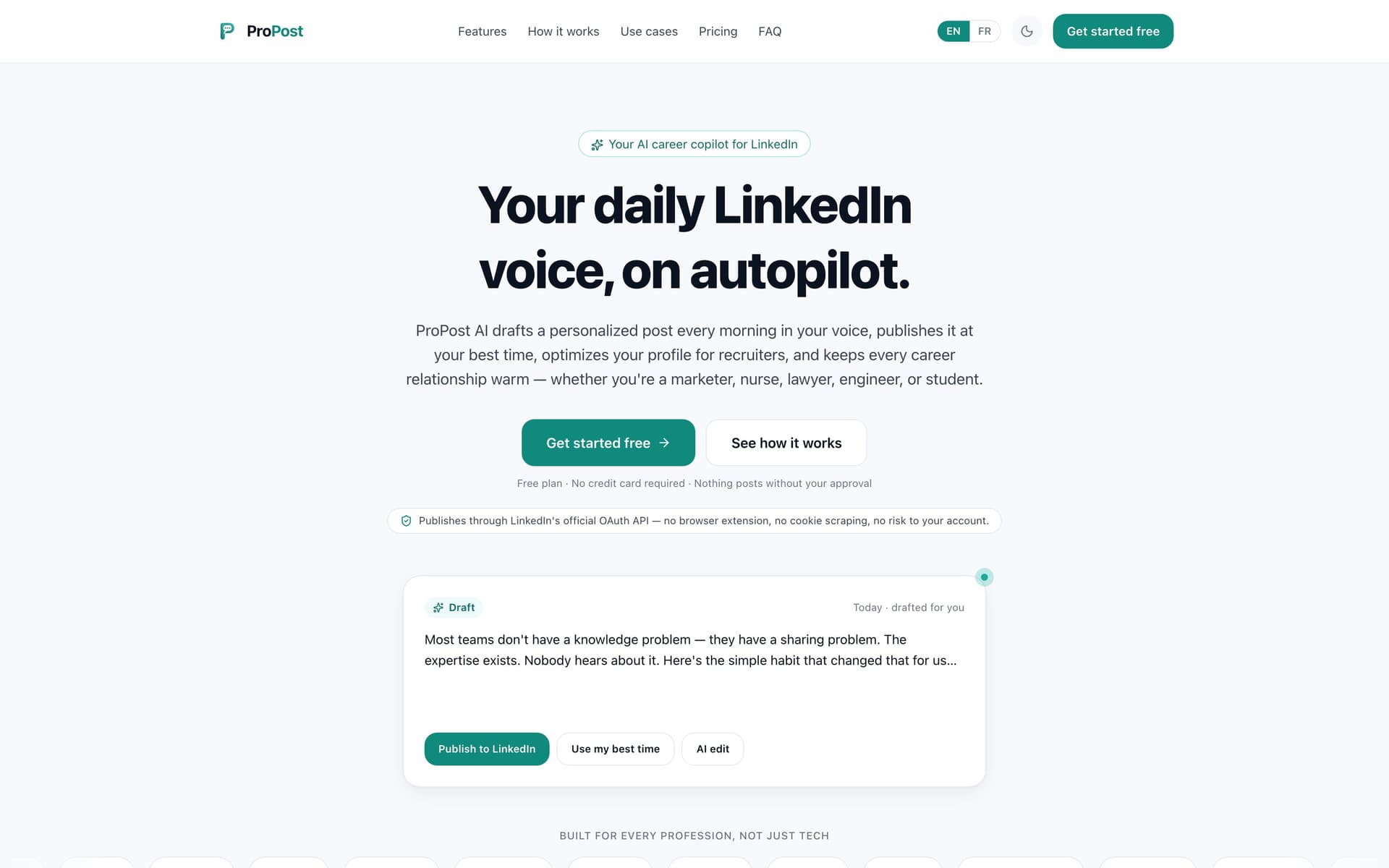
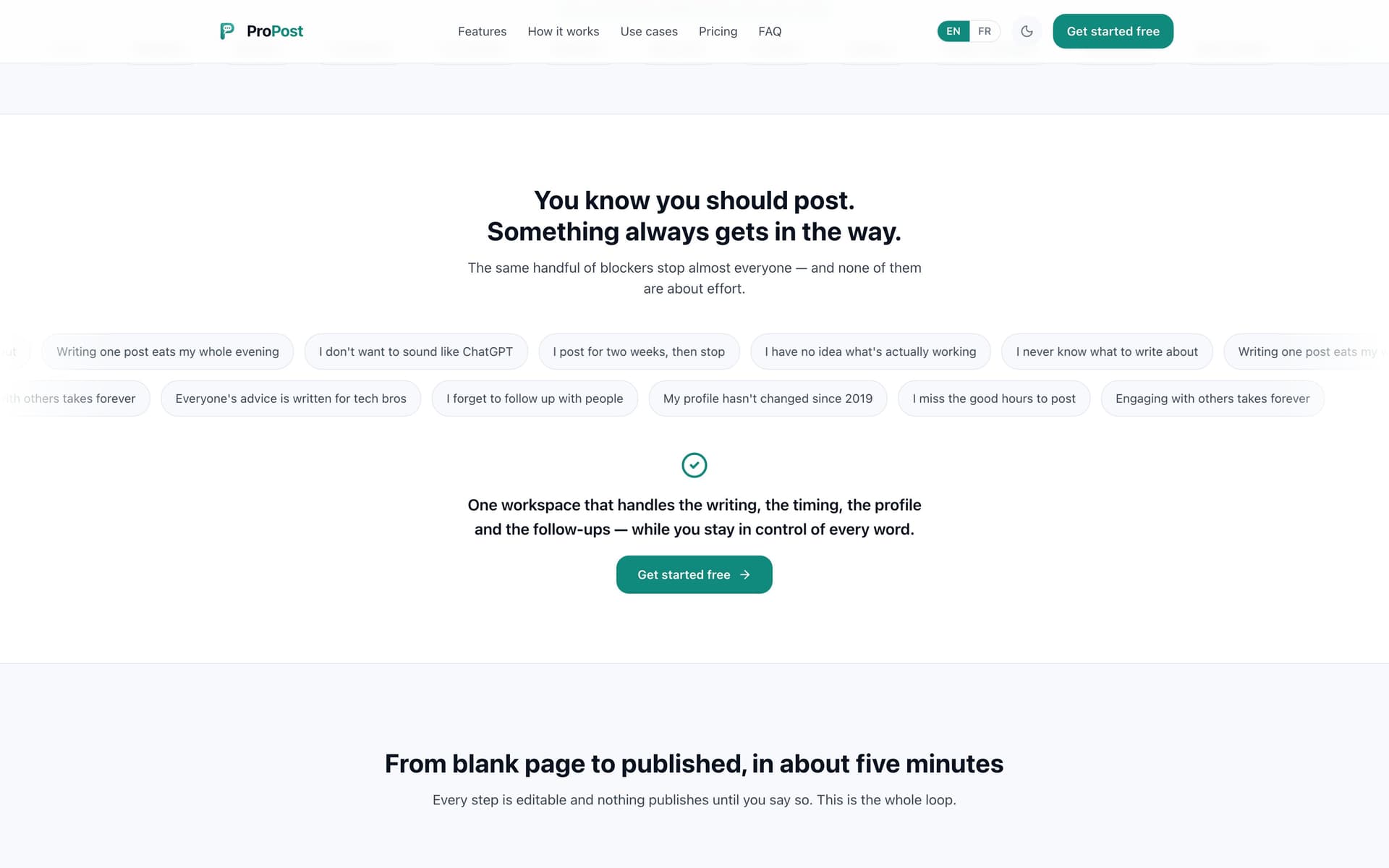
How it was built.
The architecture, the constraints it was chosen against, and the trade-offs that came with it.
A Next.js application on Vercel with Firebase for identity and data, publishing through LinkedIn's official OAuth API — no browser extension, no cookie scraping, tokens encrypted at rest — because an account that gets banned is worse than an account that goes quiet. A daily generation pipeline drafts in the user's own voice from field-specific news, then runs its own output back through a detection pass that flags and rewrites machine-sounding patterns before a human ever sees it. Scheduling derives send times from each account's own engagement history rather than a global 'best time to post'. Publishing is approval-gated by design: the automation drafts, the user decides, and the model never gets to speak unsupervised on someone's professional record. Around that sit profile optimisation against ATS keywords, a lightweight CRM for recruiters and warm leads, and monthly reviews of consistency and engagement. Stripe handles subscriptions; the interface ships in English and French.
Stack
What it moved.
Measured after delivery, against the numbers the engagement started from.
- Drafts per user, per year
- 365
- Posts published without approval
- 0
- Professions served
- Any, not just tech
See it for yourself.
Something similar on your desk?
Let’s talk about it.